
Printing for the way Chicago does business.
Chicago is a headquarters, trading and manufacturing city that still does business face to face, neighbourhood by neighbourhood.
Chicago carries the exchanges and the law firms of the Loop, a deep bench of corporate headquarters, one of the largest convention centers in the world, and seventy-seven neighbourhoods each with a business strip of its own. Fulton Market and the West Loop hold the restaurants and the tech offices; River North holds the agencies and galleries; Pilsen, Logan Square and Wicker Park hold the independents.
Chicago print has to be solid. A card here is judged on whether it feels like a business that will be around next winter, so stock and finish do real work. Postcards and flyers still move the neighbourhoods, and a rack card at a counter on Milwaukee Avenue reaches a crowd that came from everywhere.
Where print earns its keep in Chicago.
Print works differently in different parts of a city. These are the places in Chicago where a printed piece tends to do the most work, and the piece that usually suits each one.
The Loop and River North. Finance, law, agencies and galleries. Cards that feel established and a sales sheet for the pitch.
Fulton Market and the West Loop. Restaurants and tech offices. Postcards for openings and cards for teams that grow monthly.
Wicker Park, Logan Square and Pilsen. Independent shops, studios and venues. Flyers, postcards and rack cards with character.
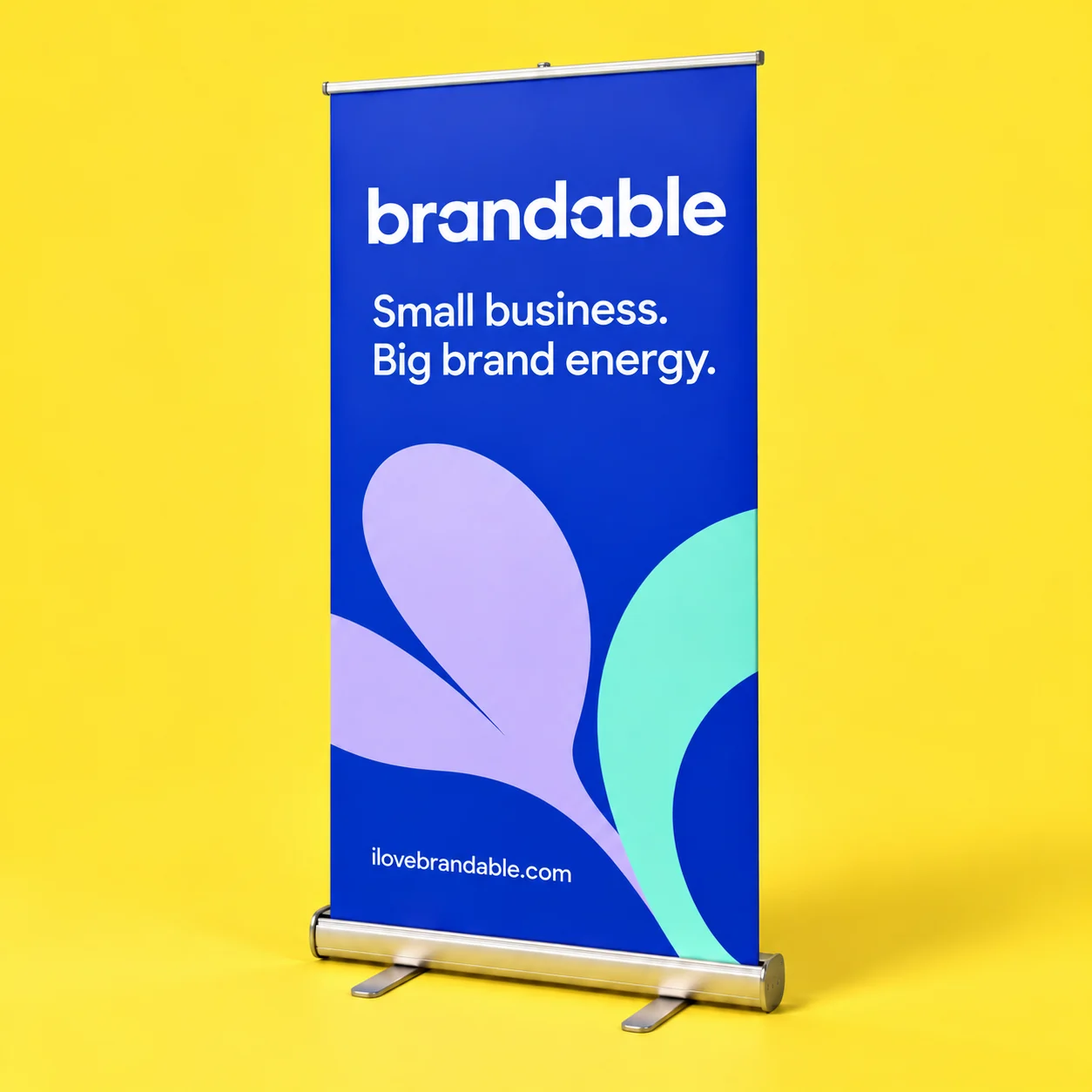
McCormick Place. The largest convention center in North America. A retractable banner and a sales sheet, every week of the year.
One clear purpose. The right piece of paper.
What Chicago tends to order. Chicago's status as one of the largest rail freight hubs in North America supports a logistics trade that wants a plain sales sheet with real capacity numbers over a designed pitch. The city's architecture and engineering firms, working in a place that takes the profession seriously, often need a trifold brochure or sales sheet for a project submission long before a client sees a rendering. Devon Avenue and other South Asian and immigrant business corridors are dense enough that a bilingual postcard or EDDM route reaches a real audience.
Put a readable name first, then one line about what you do, then the one contact route you want people to use. A finish should support that, never make it harder to read.
Compare business card finishes| The moment | What usually works |
|---|---|
| A show at McCormick Place | A retractable banner, booth cards and a sales sheet |
| A restaurant opening in the West Loop | Postcards and rack cards from opening night |
| A neighbourhood festival season | Flyers and banners for a vendor space |
| A practice or firm expanding in the Loop | Business cards for the whole team, one proof |
Make the whole set feel like your business.
A Chicago note. Chicago design is confident and structured; it likes a grid. Give the card a clear hierarchy and a stock with weight, 16pt at least, 32pt if you want it noticed. Matte for professional, gloss for hospitality. Winter is long here; a card that survives a coat pocket earns its keep.
A brand does not need every piece to look identical, only a consistent voice, a deliberate palette and type that works at several sizes. Bring your logo, or start from nothing: print product design is $97 and logo design is $250, set up for the product and finish you picked.
See what design costsPlan around the day you need it in hand.
Work backward from the day the materials have to be ready, and leave room for artwork, the proof, production and shipping. Each product page states its own time on press: two to three business days for most cards and postcards once you approve your proof, three to four for soft touch and door hangers, seven to twelve for the XL banner. Shipping sits on top of that. Give us the delivery address and your date when you order, with a receiving name if it is going to a venue, a hotel or a shared office. If the date is fixed, say so and we will tell you whether it is possible before you pay.
Getting print into Chicago. Wind off Lake Michigan is a real, constant factor downtown and along the lakefront, and anything meant to stand outside, a banner included, needs a genuinely stable base or it will not stay upright for long. Chicago's alley system behind most buildings is where deliveries actually happen in older neighbourhoods, so a receiving address is often the alley entrance rather than the street-facing door. The city's address grid is logical but large, so two addresses close on paper by number can still be a real distance apart.
Mailing in Chicago. For postcards by route, Lincoln Square, Andersonville, Beverly and Oak Park are established neighbourhoods where a mailer reaches households and gets read.
Give the file your full attention.
Use the artwork guide on the product you picked, because the finished size, the bleed and the safe area are not the same for every format. Upload a PDF, PNG or JPG and the size, bleed and resolution are checked in your browser, then your proof arrives by email and nothing goes to press until you approve it. Read your own details out loud when it lands: names, numbers, web addresses, dates, spelling and which side is which. If there is a QR code, scan it yourself.
See the artwork guide on a product